
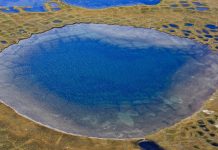


A September study finds thawing permafrost and wildfires add heat that major UN assessments leave out.
None of the models behind major UN climate reports account for all the feedback effects that warming triggers, and many include none of them. A September study in Environmental Research Letters found that emissions from thawing permafrost, wildfires, hotter lakes, and warmer wetlands add 0.2 °C to 0.4 °C this century.
Scientists have long warned that warming drives further warming, and new observations are sharpening estimates of how strong those cascading effects are. A March analysis in One Earth examined three regional sources of warming-driven emissions and concluded that thawing permafrost, boreal forest fires, and warming tropical wetlands may shorten by as much as 25% the time before the planet breaches 1.5 °C and 2 °C.
Enterprise teams that model climate risk, set decarbonization targets, or plan long-lived infrastructure should treat the UN scenarios as a floor rather than a central case. The extra 0.2 °C to 0.4 °C carries monthslong heat waves for many cities and flood exposure for hundreds of millions of people, which changes physical risk assumptions and the emissions cuts needed to stay inside critical boundaries.
Spark Climate Solutions launched the Warming-Induced Greenhouse Gas Emissions Model Intercomparison Project, through which more than 20 international teams run the same analyses on different models. Researchers involved hope the UN folds those results into its next major climate assessment, due in 2029, and they argue nations should tighten emissions targets to match the sharper picture of the risk.
What matters
- The September synthesis puts extra warming from four feedback sources at 0.2 °C to 0.4 °C.
- Operators planning to 2050 should treat current UN warming baselines as conservative.
- More than 20 international teams now run shared feedback analyses for the 2029 UN report.
Why it matters
More than 20 international teams now run shared feedback analyses for the 2029 UN report.
This GenAI News article was prepared in original wording using reporting and materials published by MIT Technology Review AI. Source reference: https://www.technologyreview.com/2026/10/29/1147735/climate-models-blind-spot/.
Drafted by the GenAI News review pipeline.