
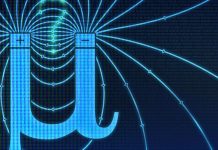


The discrepancy in muon measurements is attributed to a calculation fluke, not new physics.
Physicists have spent two decades trying to understand a mismatch between experimental results and theoretical predictions for the magnetic properties of the muon. The muon, a heavier cousin of the electron, is particularly sensitive to virtual particles in the quantum vacuum.
The Muon g-2 experiment aimed to measure the anomalous magnetic moment of the muon with high precision. In 2006, the final result showed a discrepancy with the predicted value of the Standard Model, hinting at new physics beyond the established framework.
However, a new paper published in Nature suggests that this discrepancy is due to an error in calculations, not a sign of new forces or interactions. The researchers applied a new method to calculate the anomaly and found that it can be explained by the old interactions, without any need for a new force.
The muon’s magnetic properties are influenced by its angular momentum and internal magnet. In a magnetic field, the muon’s spinning magnetic moment experiences a torque, causing it to precess around the axis of the field. This effect is known as the anomalous magnetic moment, which differs from the classical value b…
What matters
- The muon’s magnetic properties have been puzzling physicists for 20 years.
- A new paper suggests the discrepancy is due to an error in calculations, not a new force.
- The Standard Model of particle physics remains intact.
Why it matters
The Standard Model of particle physics remains intact.
This GenAI News article was prepared in original wording using reporting and materials published by Ars Technica. Source reference: https://arstechnica.com/science/2026/04/physicists-think-theyve-solved-the-muon-mystery/.
Drafted by the GenAI News review pipeline.