
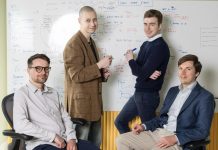


The London lab’s 27-billion-parameter Faraday agent beat Claude Opus 4.8 and GPT-5.5 on reproducing scientific results.
Inherent, a London AI lab founded by Google DeepMind alumni, says its agent Faraday outperformed Anthropic’s Claude Opus 4.8 and OpenAI’s GPT-5.5 at replicating published scientific results without prior knowledge of the outcomes.
Inherent left stealth with a $50 million seed round and runs Faraday on a compact 27-billion-parameter Qwen 3.6 model, using reinforcement learning to teach the agent how to design experiments rather than following explicit rules.
For teams working with small models, Faraday’s performance demonstrates that reinforcement learning can reduce the need for frontier-scale parameters, though the benchmark only covered reproducing existing results.
Inherent plans to extend Faraday’s learning from paper replication to broader scientific discovery, while keeping its agent small and focused on research taste rather than general coding ability or user-pleasing outputs.
What matters
- Inherent’s Faraday agent used a 27-billion-parameter model to beat frontier rivals on paper replication.
- For teams building small models, the result shows reinforcement learning can unlock research-level capability.
- Watch whether Inherent can scale Faraday from paper replication to genuine scientific discovery.
Why it matters
Watch whether Inherent can scale Faraday from paper replication to genuine scientific discovery.
This GenAI News article was prepared in original wording using reporting and materials published by TechCrunch AI. Source reference: https://techcrunch.com/2026/08/22/inherent-founded-by-deepmind-alumni-says-its-ai-teammate-just-outperformed-anthropic-and-openai-at-replicating-research/.
Drafted by the GenAI News review pipeline.