
AI is everywhere and accelerating everything — becoming essential infrastructure to create the intelligence that will advance every industry.
That’s why companies are increasingly focusing on the technology’s return on investment (ROI), as well as how to best apply AI to their own use cases.
NVIDIA’s annual “State of AI” reports show how AI is being adopted across industries, what it’s being used for and how companies are achieving ROI, as well as their challenges and goals with the technology.
This year’s reports garnered over 3,200 responses from around the world, providing a pulse check on the state of AI in financial services, retail and consumer packaged goods (CPG), healthcare and life sciences, telecommunications and manufacturing.
One takeaway is clear: The state of AI is strong. AI adoption is continuing to rise. Companies are building and deploying specialized AI programs with open source tools to tackle their specific challenges. Across every industry, AI is helping increase annual revenue and drive down annual costs while boosting productivity.
Read about the broad themes from this year’s reports:
- Growing enterprise AI adoption
- AI drives productivity gains across every industry
- AI increases annual revenue and drives down costs
- The rise of agentic AI
- Open source drives AI strategy
- AI success leads to growing investment
- The biggest challenges to AI adoption: lack of AI experts
Enterprise AI Adoption Matures
Enterprise AI is continuing to scale.
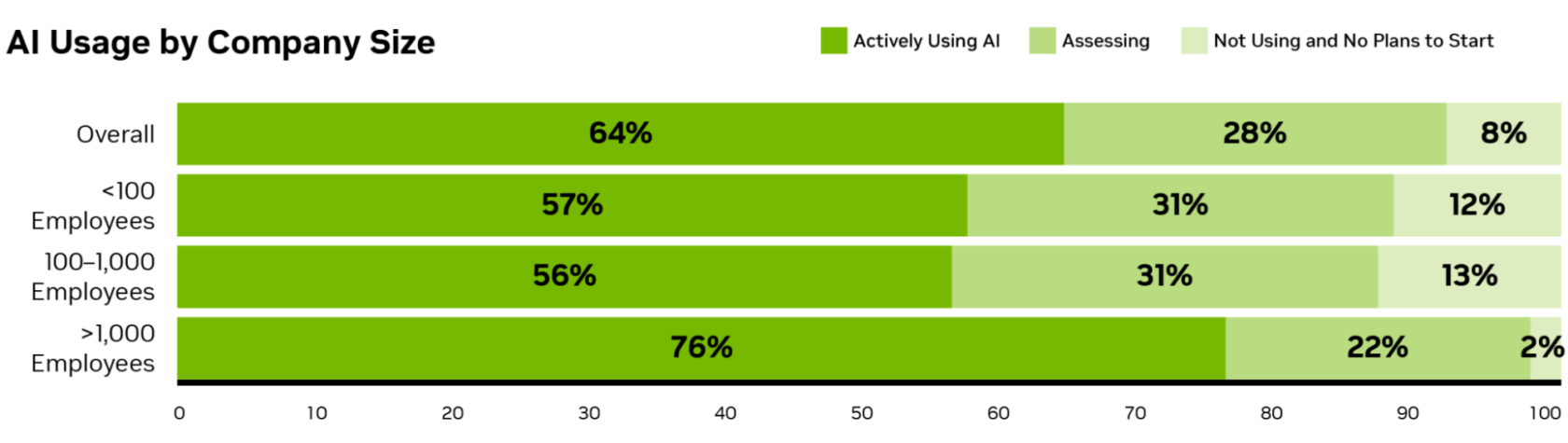
Companies are moving from AI pilots and assessment to scaled deployment. In nearly every industry survey, the percentage of respondents who said their organizations are actively using AI increased, while the percentage of respondents who said they’re in the assessment phase declined.
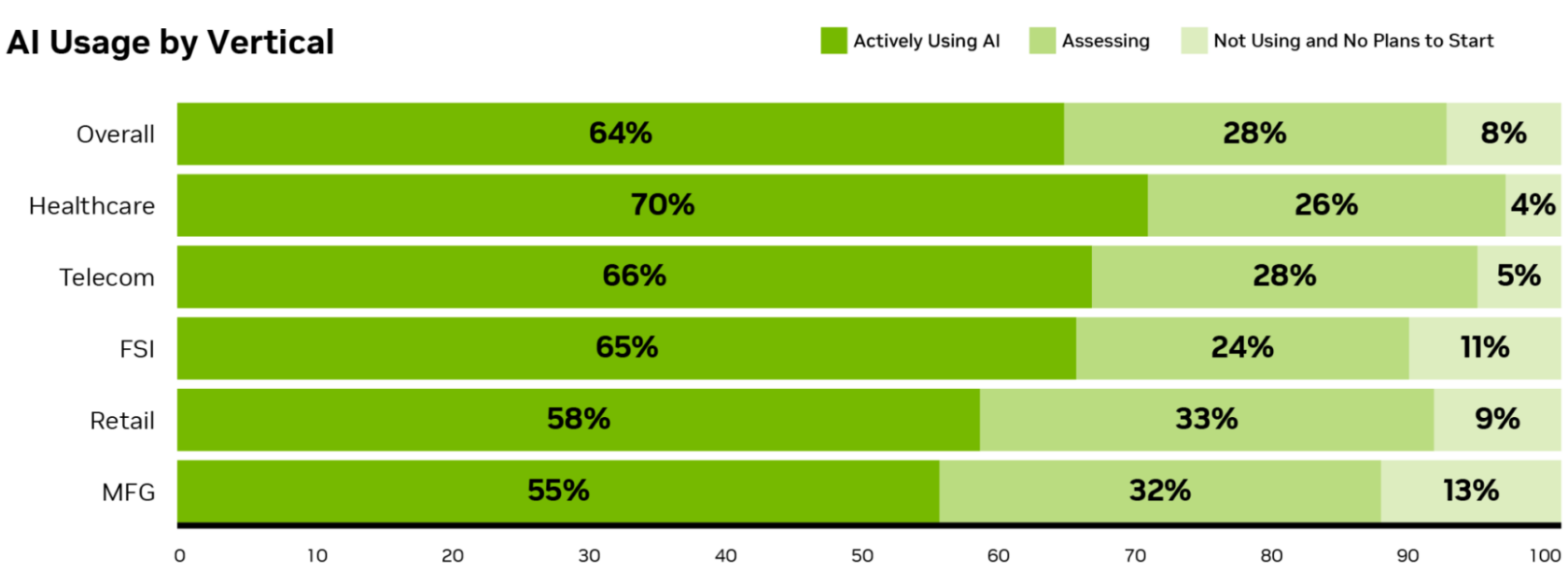
Overall, 64% of respondents to the surveys said their organizations are actively using AI in their operations. A little over a quarter (28%) said they’re still in the assessment phase, while 8% said they’re not using AI and have no plans to start.
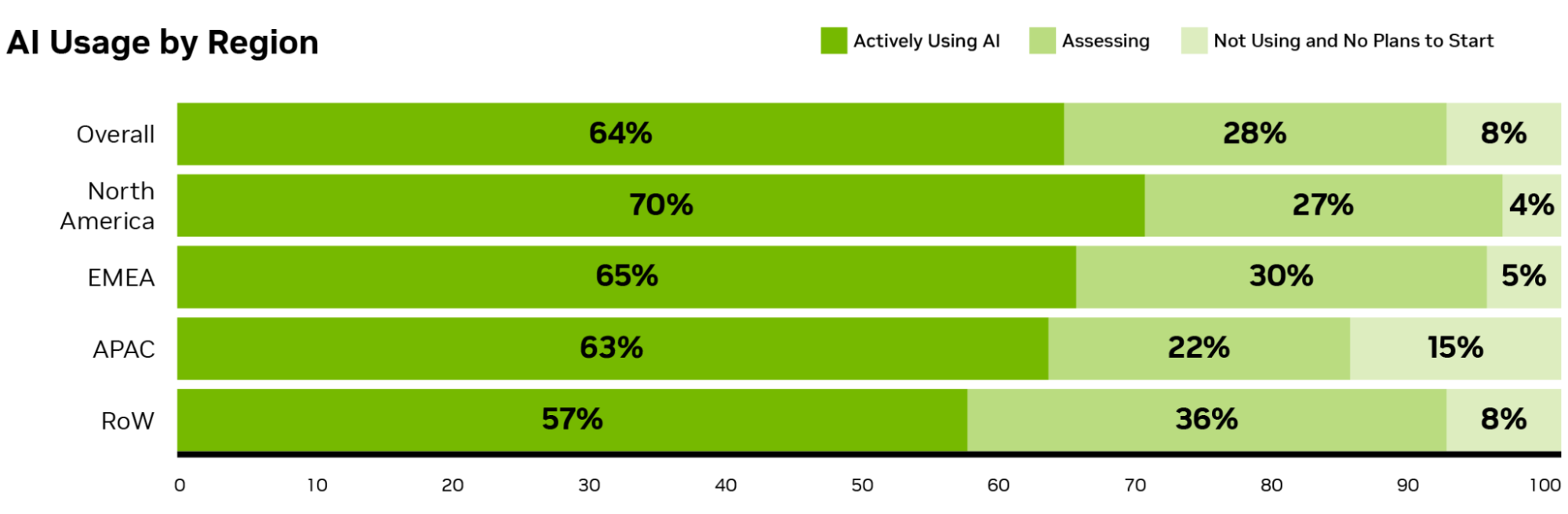
North America leads in AI adoption, with 70% actively using the technology, 27% assessing AI projects and just 3% who said they’re not using AI. Nearly two-thirds (65%) of respondents in the EMEA region report they’re actively using AI. AI adoption in the APAC region registers at 63%, with a higher percentage (15%) saying they’re not using AI.
A distinct throughline was clear across all surveys: Larger companies (with more than 1,000 employees) demonstrate broader adoption, deploy more use cases and report greater ROI. More than three-quarters (76%) of respondents from large companies report active AI usage, with just 2% saying they don’t use AI at all. These trends can be attributed to the fact that large companies have more capital to invest in AI infrastructure, data scientists and experts, leading executives to drive projects from pilot to production on highly specific and impactful use cases.
The financial services industry churns massive amounts of text, numbers, documents and analysis. Nasdaq, one of the world’s premier stock exchanges and leading financial technology platforms, has built an AI platform to optimize its internal operations and enhance its external products, helping improve functionality and user experience while streamlining internal work processes.
“At Nasdaq, we are a technology platform company, and AI has the ability for us to unite all the different businesses and products,” said Michael O’Rourke, senior vice president and head of AI and emerging technology at Nasdaq. “AI will help bring together data from all our businesses and technologies, and help us build better products and services.”
Read more in this year’s State of AI in Financial Services report.
AI Is Boosting Productivity
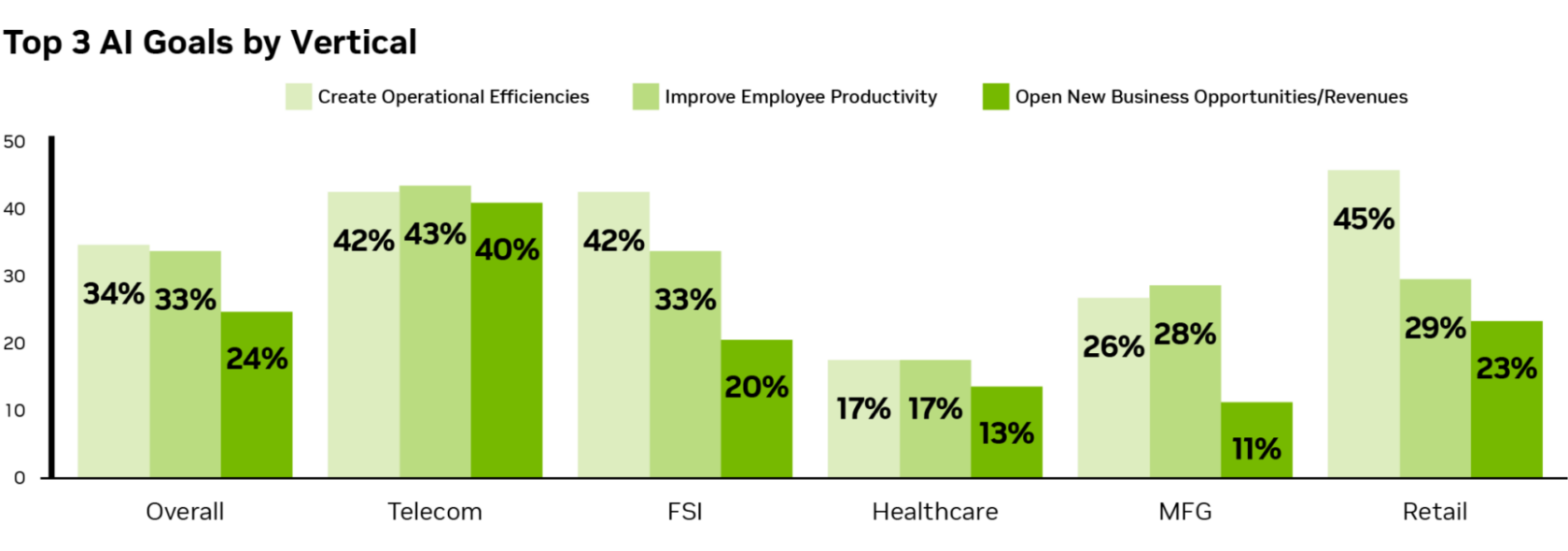
This year’s surveys revealed that the top three AI goals are creating operational efficiencies (34%), improving employee productivity (33%) and opening new business opportunities and revenue streams (23%).
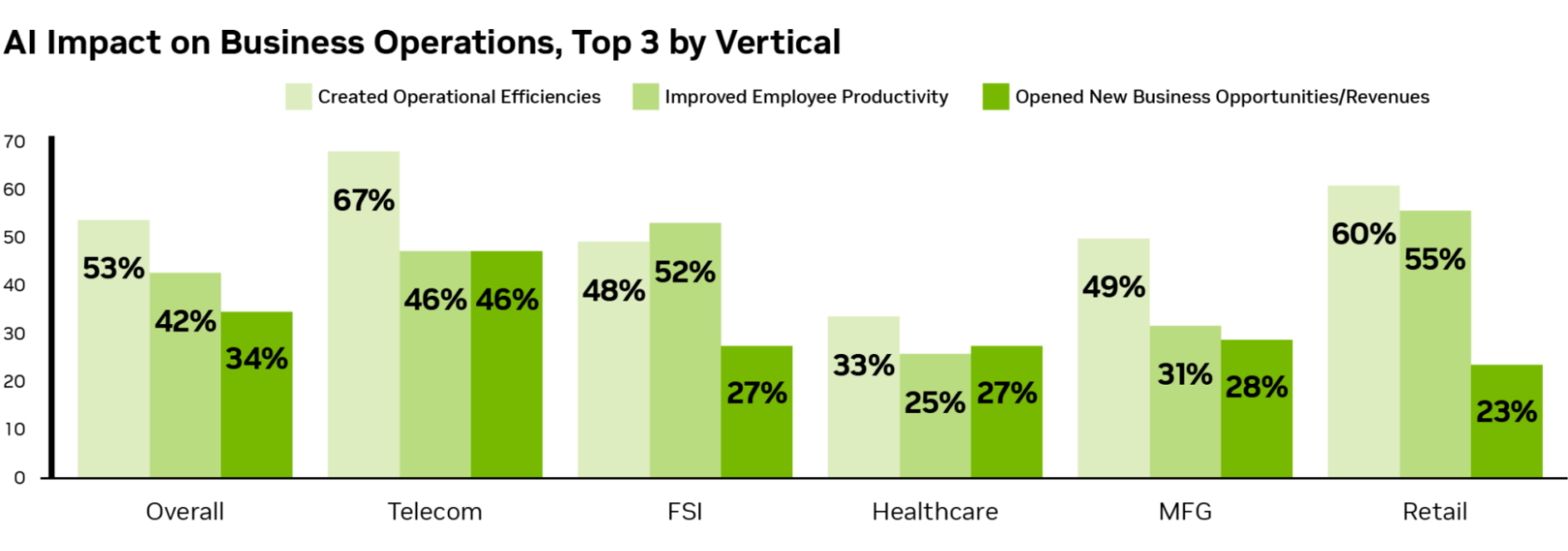
More than half of respondents (53%) said improved employee productivity was one of the biggest impacts AI had on business operations, from speeding financial market analysis to boosting efficiency on factory floors with digital twins.
For example, in this year’s NVIDIA State of AI in Telecommunications report, 99% of respondents said AI helped improve employee productivity, with a quarter saying the technology provided a major or significant improvement.
Productivity increases have cascading effects throughout the business. For instance, 42% of overall respondents said AI created operational efficiencies, and 34% said the technology helped open up new business and revenue opportunities.
Manufacturing is one such industry benefiting from AI integration.
Siemens, for example, is helping manufacturers realize productivity gains and optimize workflows by integrating AI into its tools and applications.
PepsiCo is an early adopter, working with Siemens and NVIDIA to convert selected U.S. manufacturing and warehouse facilities into high‑fidelity 3D digital twins that simulate end‑to‑end plant operations and supply chains. Using Siemens’ Digital Twin Composer, PepsiCo can recreate every machine, conveyor, pallet route and operator path with physics‑level accuracy, enabling AI agents to simulate and refine system changes and identify up to 90% of potential issues before any physical modifications occur.
This has already delivered a 20% increase in throughput on initial deployments, driven faster design cycles with nearly 100% design validation and produced 10-15% reductions in capital expenditure.
AI Is Boosting Revenue and Reducing Costs
A major concern surrounding AI adoption is whether investment in the technology actually results in revenue gains, decreased costs, increased productivity and enterprise efficiency.
According to survey respondents, the answer is a definitive yes.
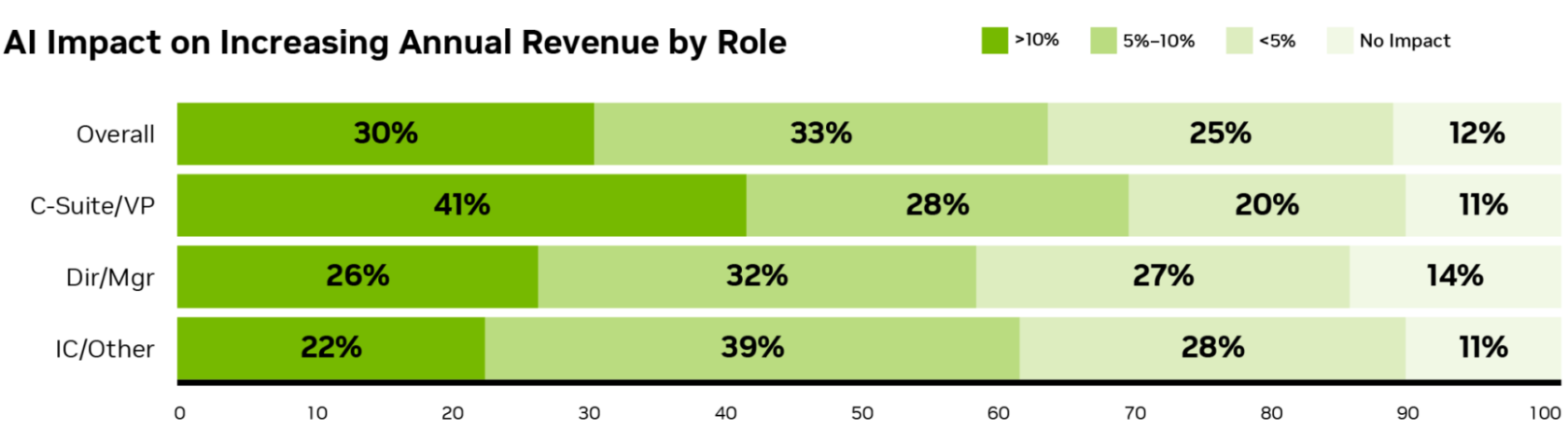
Overall, 88% of respondents said AI has had an impact on increasing annual revenue, in some or all parts of the business. Nearly a third (30%) said the increase has been significant (greater than 10%), with 33% reporting a 5-10% increase and 25% saying the increase has been less than 5%. A little over 40% of executives (C-suite or vice president level) said they saw an annual revenue increase of more than 10%.
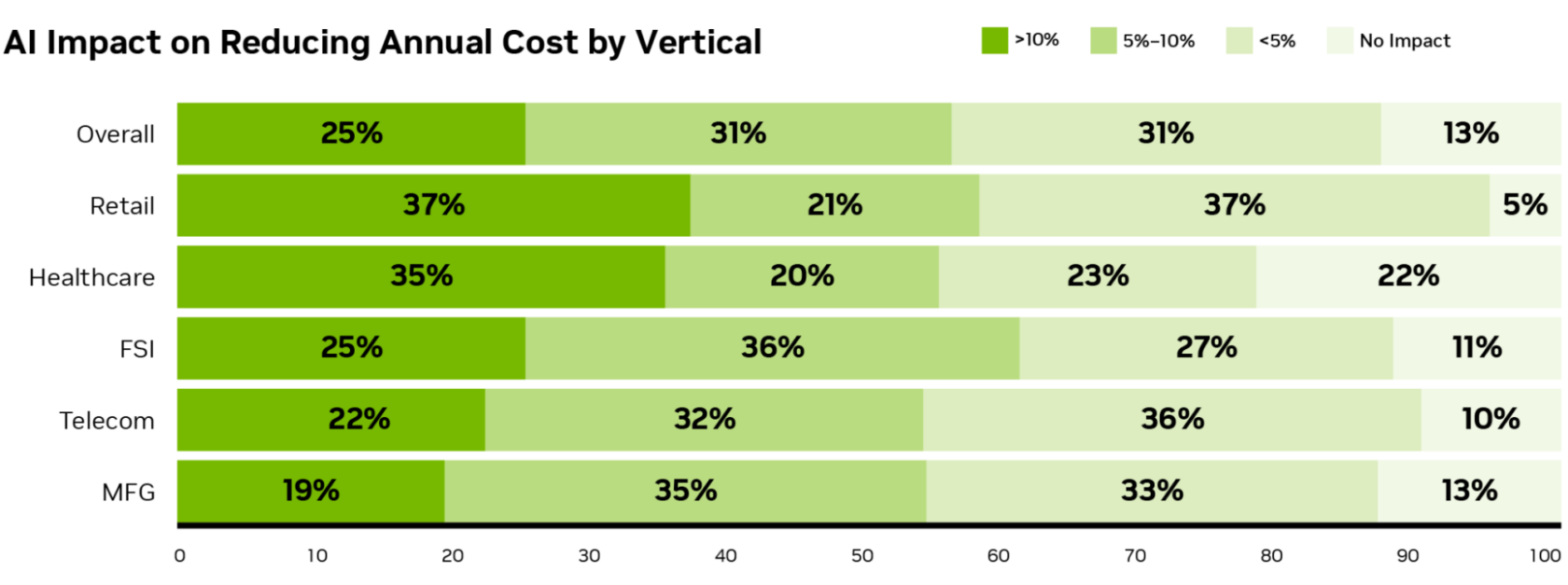
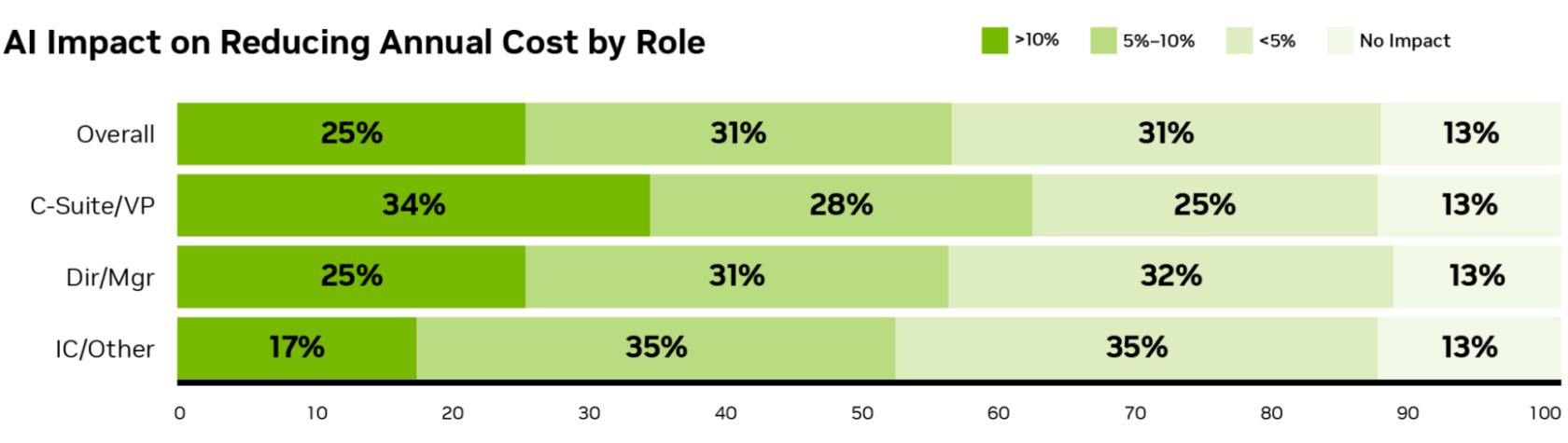
The story’s the same for AI’s role in reducing annual costs. Overall, 87% said AI helped reduce annual costs, with 25% saying the decrease was greater than 10%. Among the industry verticals, retail and CPG shone through with 37% saying costs had been reduced by more than 10%.
Fortune 100 retailer Lowe’s has built AI-powered, physically accurate digital twins of 1,750+ stores to speed operations. The company also used AI to streamline asset discovery and enable 3D model generation — transforming 2D product images into precise, high-quality 3D models within minutes — at a cost of less than $1 per model.
Read more in this year’s State of AI in Retail and CPG report.
The Dawn for Agentic AI in the Enterprise
In 2025, companies began to experiment with AI agents — advanced AI systems designed to autonomously reason, plan and execute complex tasks based on high-level goals. The survey data, which was collected from August through December, captures the experimentation phase well, with 44% of companies either deploying or assessing agents last year. Enterprises have seen those experimentations become full-fledged deployments in early 2026, touching everything from code development to legal and financial tasks, administrative support and more.
Telecommunications had the highest rate of adoption of agentic AI at 48%, followed by retail and CPG at 47%.
AI agents are coming into action in every industry, in enterprises large and small. For example, Mona by Clinomic, a medical onsite assistant that helps doctors and nurses manage patients in intensive-care units, consolidates, analyzes and visualizes patient data in real time. Mona has produced a 68% reduction in documentation errors, enhancing the accuracy of patient records and improving overall care quality while helping clinical-care professionals realize a 33% reduction in perceived workload.
Read more in this year’s State of AI in Healthcare and Life Sciences report.
Generative AI is proving to be a powerful, flexible tool in the hands of motivated enterprises, with data and predictive analytics as the top AI workload.
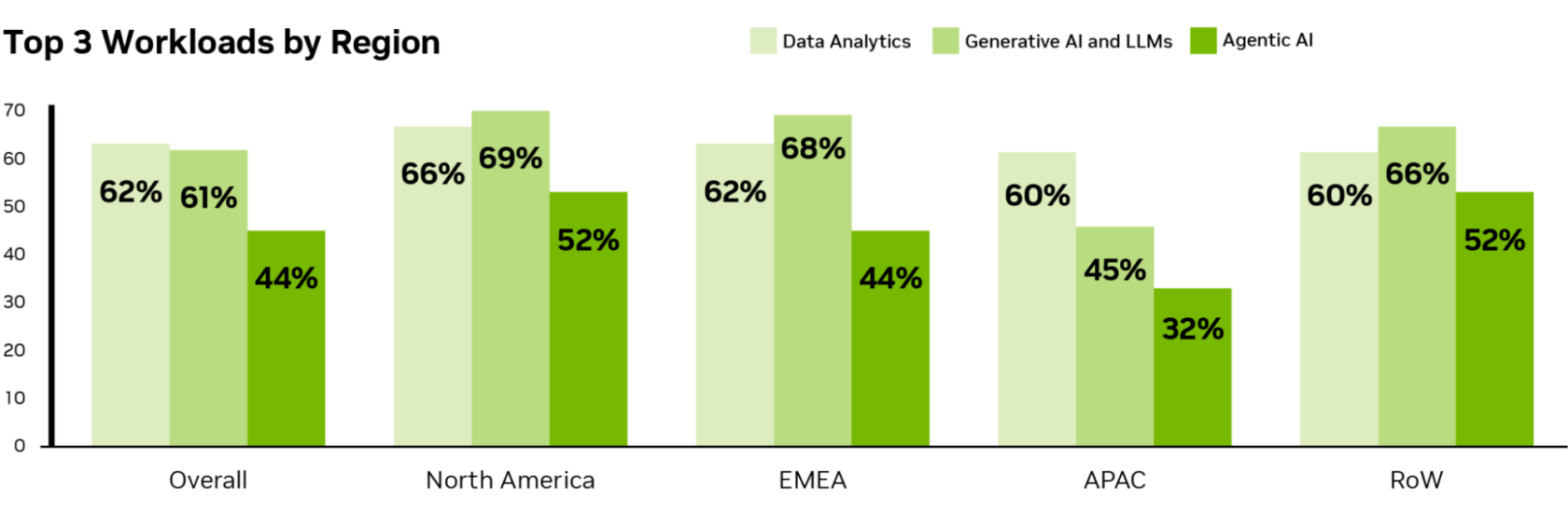
Overall, 62% of respondents cited data analytics among their top AI workloads. Generative AI was a close second at 61%, and even surpassed data analytics in industries including healthcare and life sciences and telecommunications. In addition, generative AI was the top workload among North American and EMEA respondents.
Open Source Drives AI Strategy
Companies are seeing significant ROI when deploying and scaling highly specific applications that target a distinct business opportunity.
The key to building highly specific and profitable AI applications is using open source and open weight models and software, which allows organizations to bring the right tools to solve specific problems and fine-tune models with their own data for deployment in generative and agentic applications.
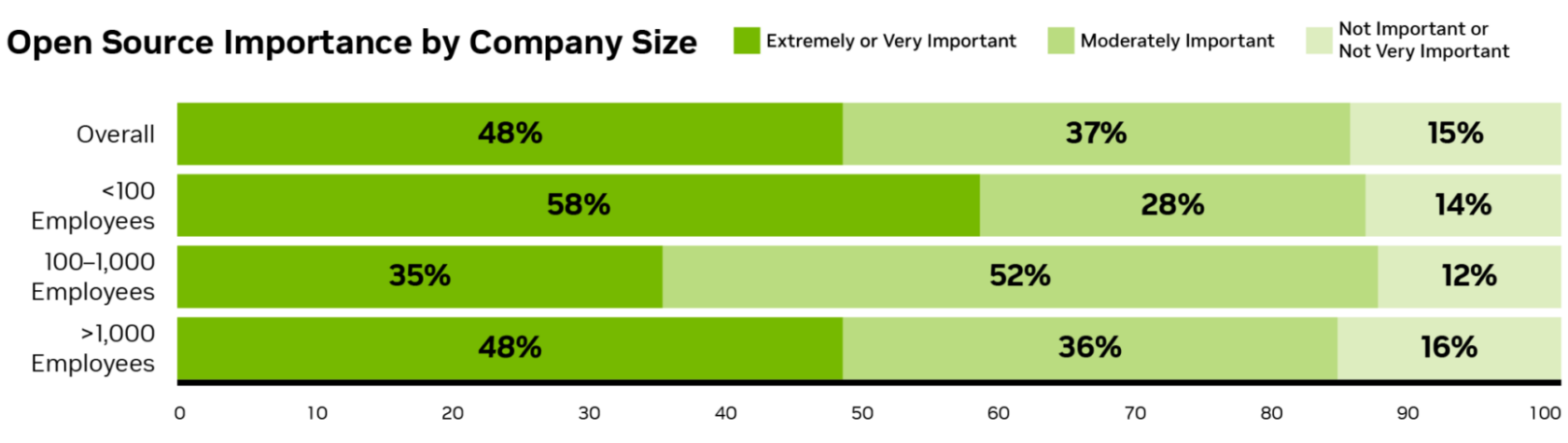
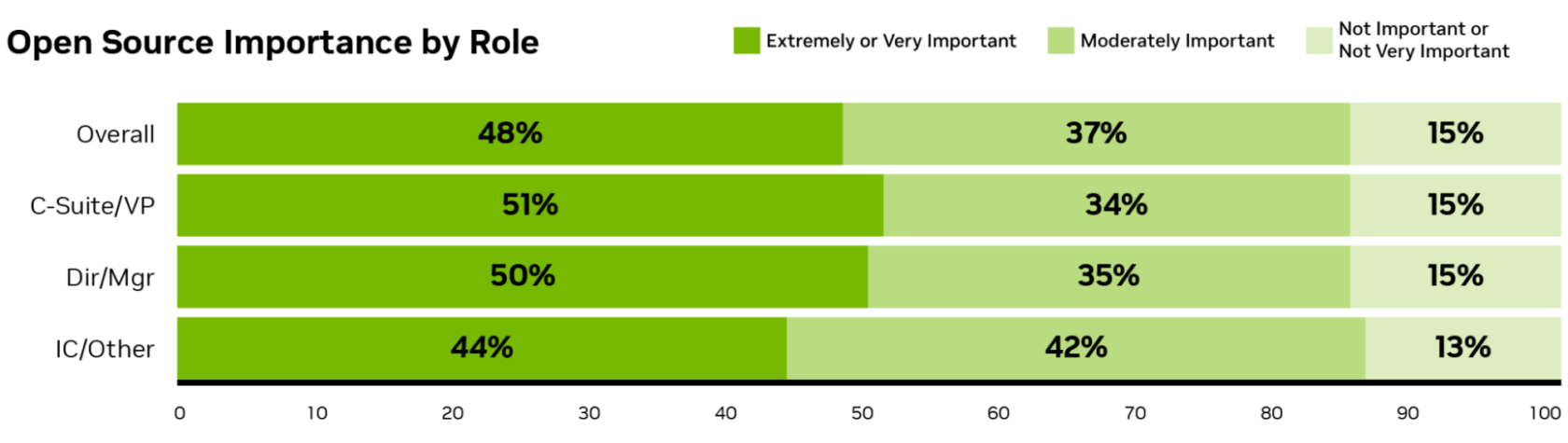
Overall, 85% of respondents said open source is moderately to extremely important to their organization’s AI strategy. That includes nearly half (48%) who said open source is very to extremely important.
Small companies, which are often resource-constrained and prefer to build solutions rather than pay for commercial off-the-shelf products, were especially keen on open source, with 58% saying open source is very to extremely important. More than half of executives (51%) throughout the surveys also cited the high importance of open source.
AI Success Leads to Increased Budgets — and More AI
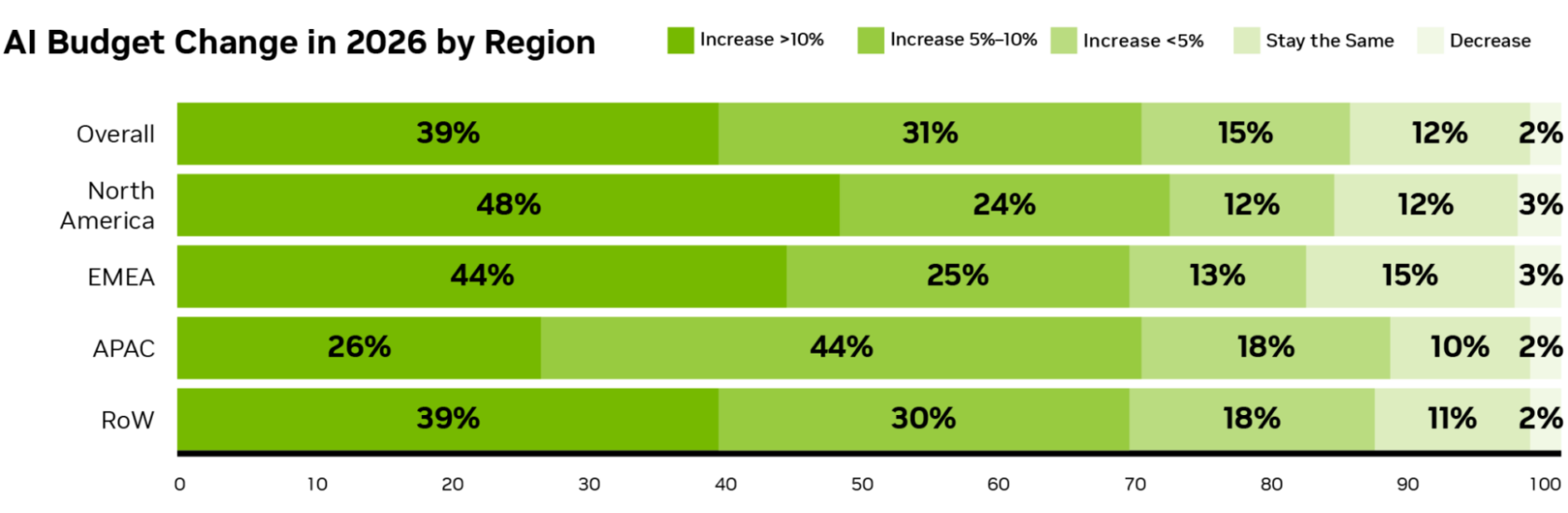
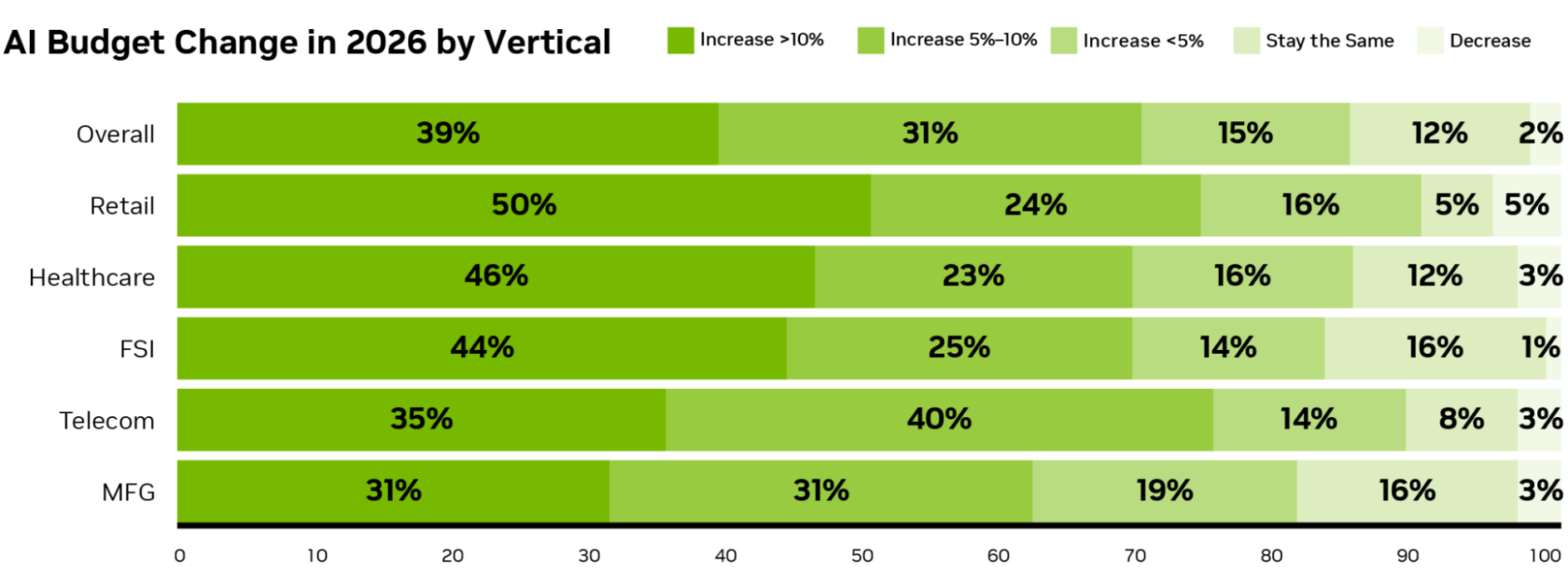
Nearly all the respondents in this year’s surveys said their AI budgets will increase or at least stay the same in 2026.
Overall, 86% of respondents said their AI budget will increase this year. Another 12% said budgets will stay the same. And nearly 40% of respondents said budgets will increase by 10% or more. North American organizations are especially keen on increasing their AI budgets, with 48% stating their budgets would increase by 10% or more, as well as 45% of executive-level respondents.
The surveys revealed that the financial services, retail and CPG, and healthcare and life sciences industries showed the strongest adoption and ROI results.
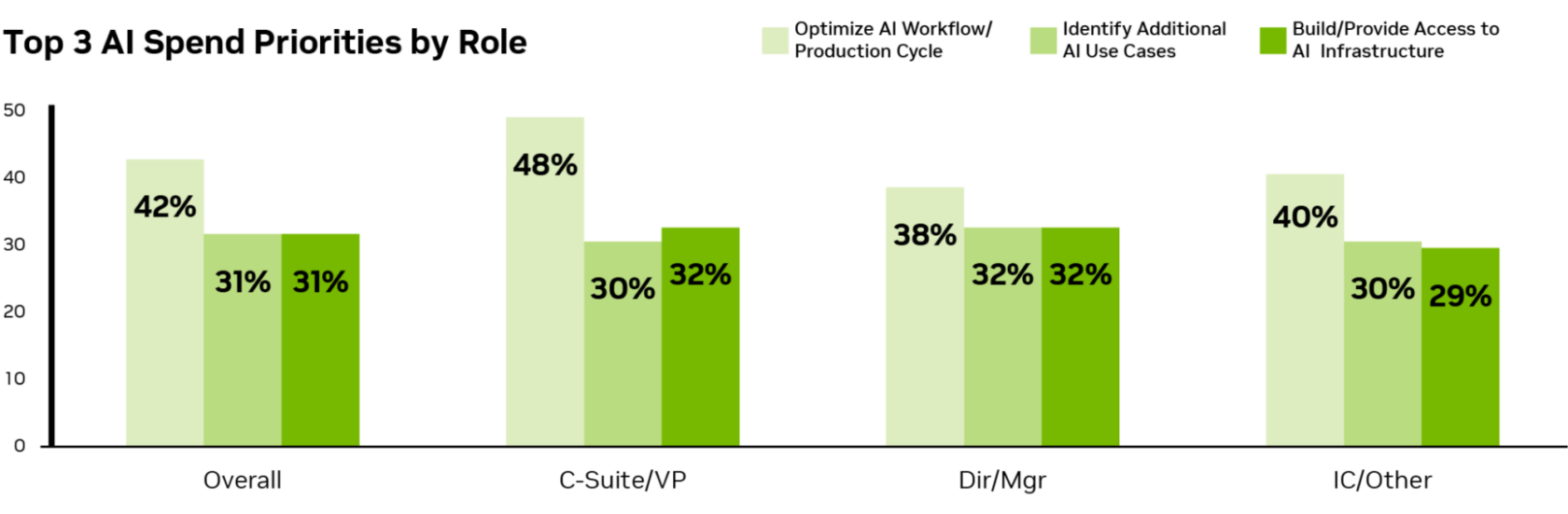
The spending will go toward optimizing current AI solutions and finding more use cases across the enterprise. Overall, 42% of respondents said optimizing AI workflows and production cycles was the top spending priority in 2026, followed by 31% who said they’d spend on finding additional use cases. Another 31% said spending would go toward building and providing access to AI infrastructure, such as on-premises data centers, or to the cloud.
The Challenge: Finding AI Experts
AI has strong momentum in the enterprise, but it’s still fairly early in the adoption cycle. Nearly a third of respondents in the surveys are still in the pilot and assessment stage. Challenges persist in workflows and operations, as well as getting the right expertise to scale impactful solutions.
Organizations are also still grappling with their data. Building specialized AI applications requires enterprises to have a handle on their data to fine-tune models for their needs. Having sufficient data and other data-related issues were cited as the top challenge in the surveys, according to 48% of respondents.
Lack of AI experts and data scientists to implement that data and scale AI projects from pilot to production was the next most prominent challenge, according to 38% of respondents.
The benefits of AI can also be difficult to quantify. For example, improved productivity can be a subjective measurement for the everyday office worker. As such, 30% of respondents cited lack of clarity on AI’s ROI as one of their top challenges.
Methodology
Respondents of NVIDIA’s “State of AI” surveys comprise people who’ve opted in to receive communications from NVIDIA and have invested in or are curious about AI for their business.
Fielded from August to December 2025, the “State of AI” surveys garnered data from over 3,200 respondents across financial services, retail, healthcare, telecommunications and manufacturing. Respondents included a variety of roles, such as C-suite and vice presidents (27%), directors and managers (33%) and AI practitioners (40%).
Respondents represented organizations of varying scale, with 39% from large enterprises employing more than 1,000 people, 27% from mid-sized companies with 100-1,000 employees and 34% from smaller organizations with fewer than 100 employees.
Geographic distribution spanned four major regions: APAC (32%), North America (26%), EMEA (21%) and the rest of the world (20%).
The online surveys were sourced from NVIDIA’s distribution lists and through social media globally, and in China and Japan through a third-party agency.