
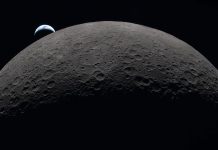


The lunar flyby drew tens of millions of viewers and reignited the debate over whether crewed missions justify their cost.
Artemis II carried four astronauts around the moon and set a record for the farthest humans have ever traveled from Earth, surpassing Apollo 13 by about 4,000 miles. The mission drew tens of millions of viewers, and the spontaneously coined term moon joy became a viral sensation during the flight.
The Artemis program aims to establish a human base on the south pole of the moon during the 2030s, with US, international, and commercial partners. China and Russia have teamed up to build a crewed lunar base in the same region on a similar timeline. Companies including Blue Origin and SpaceX aim to fly civilian astronauts on private missions, with the long-term goal of taking them to the moon or Mars.
For builders and operators, the central question is whether human presence justifies the extra cost and risk over robotic alternatives for scientific discovery and commercial activities such as mining. Launching humans into space is dangerous and expensive, and the return on investment compared with robots remains unclear.
New books are framing human space exploration as an expression of an ancient instinct to roam. Deana L. Weibel’s The Ultraview Effect compares space travel to pilgrimages, Eiman Jahangir recounts a Blue Origin flight in A Heart for Space, and Leroy Chiao’s Dinner with an Astronaut stresses the need to see the other side. Watch future Artemis and private missions to see if that instinct pays off.
What matters
- Artemis II carried four astronauts beyond Apollo 13’s record distance from Earth.
- Enterprises will weigh the high cost of crewed missions against robotic alternatives for science and commerce.
- Future Artemis and private flights will test whether the urge to explore justifies the cost.
Why it matters
Future Artemis and private flights will test whether the urge to explore justifies the cost.
This GenAI News article was prepared in original wording using reporting and materials published by MIT Technology Review AI. Source reference: https://www.technologyreview.com/2026/08/18/1141614/book-review-astronaut-role-in-flux/.
Drafted by the GenAI News review pipeline.