
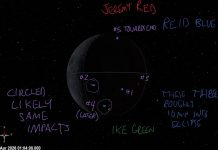


NASA says the archive includes 11,000 photos and videos, 8.5 hours of audio, and crew-annotated images.
NASA published more than 800GB of Artemis II mission data this week, posting the archive on a site called Artemis II: Sights & Sounds of Science. The collection holds over 11,000 photos and videos, more than 8.5 hours of audio, and images that crew members annotated.
Artemis II is NASA’s effort to return humans to the Moon, and the mission generated a deep catalog of scientific observations. One annotated image marks where the crew saw impact flashes on the dark side of the Moon, which may rank among the faintest such events spotted with the human eye.
For builders and operators, the release offers a large, real-world dataset of mission imagery, audio, and annotations that pairs with NASA’s own documentation. Teams working on media pipelines, transcription, computer vision, or retrieval systems can test against genuine spaceflight content rather than synthetic samples.
NASA released three companion documents alongside the archive: the Artemis II Preliminary Lunar Science Report, the Artemis II Lunar Science Operations Report, and the Artemis II Lunar Science Data User Guide. Operators should watch how NASA expands the archive as the Artemis program continues.
What matters
- NASA posted the Artemis II data dump on its Sights & Sounds of Science site this week.
- Builders can inspect raw science data, audio, and crew-annotated images from the mission.
- NASA also published three companion documents covering lunar science and data use.
Why it matters
NASA also published three companion documents covering lunar science and data use.
This GenAI News article was prepared in original wording using reporting and materials published by The Verge. Source reference: https://www.theverge.com/science/1009379/nasa-800gb-artemis-ii-data.
Drafted by the GenAI News review pipeline.