
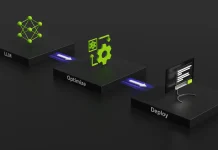


Blog post describes parallel work, model-family isolation, and GPU-backed validation as core design choices.
NVIDIA published an engineering retrospective on TensorRT Model Connect, an open source collection of C++ AI model reference implementations built on TensorRT. The post explains how the team designed the project around coding agents from the start, rather than using an agent to speed up an existing workflow.
The team picked horizontally scalable work, gave agents outcomes and objective references instead of step-by-step recipes, and isolated changes by model family so failures stayed local. Architecture and validation decide whether the higher rate of candidate implementations becomes reliable software.
Builders get a concrete pattern for AI-native development. Validation relies on human-legible evidence, self-improving agent tests, reproducible continuous integration, and adversarial review between QA and developers. Human judgment moves upstream to system design, acceptance criteria, and release accountability.
As of the July 29, 2026 release, TensorRT Model Connect covered 128 model families tested on NVIDIA GB300. The project documents a Quick Start path, qualification evidence for supported models, and an AI and Agent Guide for further work.
What matters
- NVIDIA published lessons from building TensorRT Model Connect, an open source C++ model reference project.
- The approach treats agent output as modular, verifiable units so failures stay local to one model family.
- As of the July 29, 2026 release, the project covered 128 model families tested on NVIDIA GB300 hardware.
Why it matters
As of the July 29, 2026 release, the project covered 128 model families tested on NVIDIA GB300 hardware.
This GenAI News article was prepared in original wording using reporting and materials published by NVIDIA Developer Blog. Source reference: https://developer.nvidia.com/blog/ai-native-by-design-lessons-learned-from-building-nvidia-tensorrt-model-connect/.
Drafted by the GenAI News review pipeline.