
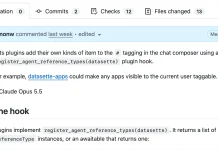


The Datasette creator folds verbose agent output into an HTML details block so reviewers see a short human summary first.
Simon Willison now hides verbose AI-generated pull request descriptions inside HTML details and summary tags, leaving a short human-approved introduction visible at the top of each PR. GitHub Markdown renders those tags as a collapsed heading that expands on demand.
Willison builds Datasette and writes often about coding agents. Most of his recent project changes arrive as pull requests that Claude Code or Codex opened, and he treats each PR as the unit of work for bundling commits, recording decisions, and merging finished features.
Agent-written descriptions tend to be accurate and thorough, which makes reviewers skip them entirely. A collapsed summary gives a reader the shortest text needed to judge whether a change deserves attention, while the full explanation of the problem, solution, and verification steps stays one click away.
Willison labels each collapsed block with the model name and effort level, such as Claude Opus 5.5 Medium, so readers know an agent produced the text. Teams that review agent output at volume can copy the pattern today, and tooling vendors have room to generate the summary layer automatically.
What matters
- Willison wraps agent-written PR essays in a details block that GitHub renders collapsed by default.
- Builders keep full verification detail while reviewers get a short, curated summary at the top.
- Watch whether other teams adopt the pattern or tooling automates summary generation for pull requests.
Why it matters
Watch whether other teams adopt the pattern or tooling automates summary generation for pull requests.
This GenAI News article was prepared in original wording using reporting and materials published by Simon Willison’s Weblog. Source reference: https://simonwillison.net/2026/Nov/9/details-summary/.
Drafted by the GenAI News review pipeline.